E-commerce Success Roadmap: From Beginner to Pro Seller
If you want to succeed in e-commerce, the key is understanding the full journey, from choosing the right marketplace to scaling your business. Sellers who start with a roadmap increase their chances of profitability by 3–5x compared to those who jump in without a plan.
Real-world case studies show that Amazon sellers using structured product research strategies consistently earn $5K–$50K/month within their first year. TikTok Shop beginners leveraging viral trends often see 2–3x faster growth than traditional advertising methods.
Introduction
Welcome to the E-commerce Success Roadmap, a complete guide designed to help you build, grow, and automate a profitable online business, even if you’re starting from zero.
This series walks you step-by-step through every stage of the e-commerce journey: from choosing your marketplace and finding winning products to advertising, scaling, and building a brand.
Whether you’re selling on Amazon, TikTok Shop, eBay, or Shopify, this roadmap will help you master each skill with practical, beginner-friendly strategies.
Step 1: The Complete Roadmap to E-commerce Success
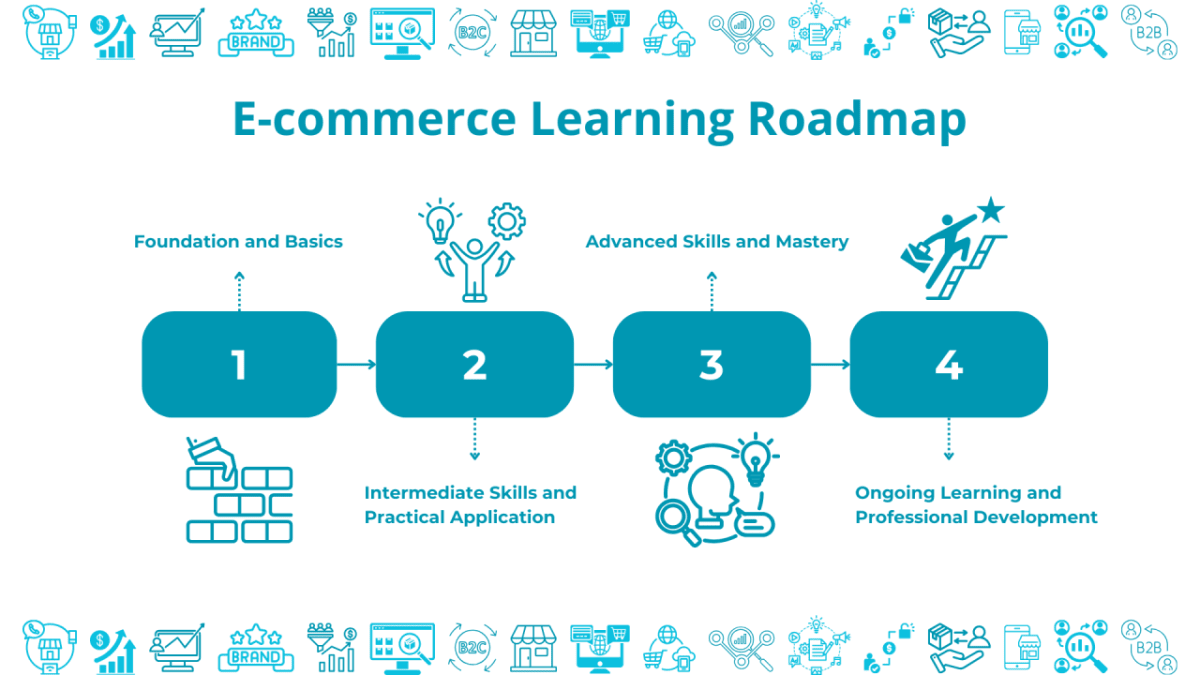
Before you start, it’s crucial to see the big picture. E-commerce isn’t just listing products—it’s a structured business process.
Key Stages Include:
Choosing the right marketplace
Selecting a business model
Finding winning products
Sourcing & supplier management
Shipping & logistics
Listing creation & optimization
Advertising & promotions
Operations management
Scaling & automation
Mini Case Study:
An Amazon seller, Sarah, mapped her entire e-commerce journey before investing. She avoided unnecessary ad spend, chose a high-margin product, and reached $20K/month in 6 months.
Step 2: Choosing the Right E-commerce Marketplace
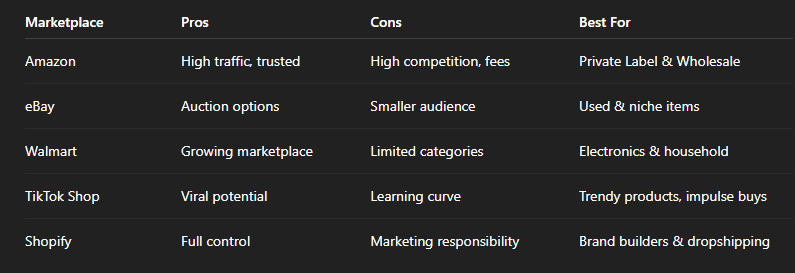
Not every platform is right for every seller. Consider your product type, budget, and long-term goals.
Marketplace Comparison Table:
Pro Tip: Start with one marketplace, master it, then expand.
Common Mistake: Jumping into multiple platforms at once, which can dilute focus and cause operational chaos.
Step 3: Understanding E-commerce Business Models
Your business model determines everything, from sourcing to advertising.
Popular Models:
Online Arbitrage: Buying low from online stores, reselling for profit.
Wholesale: Bulk purchase from suppliers; lower risk per product.
Private Label: Branding generic products; higher margins, more control.
Dropshipping: No inventory; supplier ships directly to customers.
Mini Case Study:
John started with dropshipping, testing products with $200 ad spend per month. After identifying winners, he switched to private label for higher margins and brand recognition.
Quick Wins: Use https://www.helium10.com/ or https://www.junglescout.com/ to validate your business model and product potential.
Step 4: How to Set Up Your Seller Account
Setting up an account correctly avoids delays and account suspensions.
Steps:
Register your account (Amazon Seller Central, TikTok Shop, Shopify).
Prepare documents: ID, bank account, business license (if required).
Verify identity & payment details.
Explore beginner-friendly dashboards & tutorials.
Common Mistakes:
Incorrect tax info
Missing verification documents
Using personal emails instead of a professional one
Actionable Strategy: Keep a checklist for setup; download a Step 5: How to Find Winning Products
Your product is the heart of your business.
Strategies:
Helium 10 / Jungle Scout: Analyze sales volume, competition, and pricing trends.
Google Trends: Identify seasonal or trending demand.
Competitor Research: Study top sellers in your niche.
Pro Tip: Look for products with:
High demand, low competition
Lightweight & easy to ship
Priced $15–$50 for impulse buying
Mini Case Study:
Emma used Jungle Scout to identify a trending kitchen gadget. Within 3 months, she generated $12K/month with minimal ad spend.
Read the Product Research Guide
Step 5: How to Find Winning Products
Your product is the heart of your business.
Strategies:
Helium 10 / Jungle Scout: Analyze sales volume, competition, and pricing trends.
Google Trends: Identify seasonal or trending demand.
Competitor Research: Study top sellers in your niche.
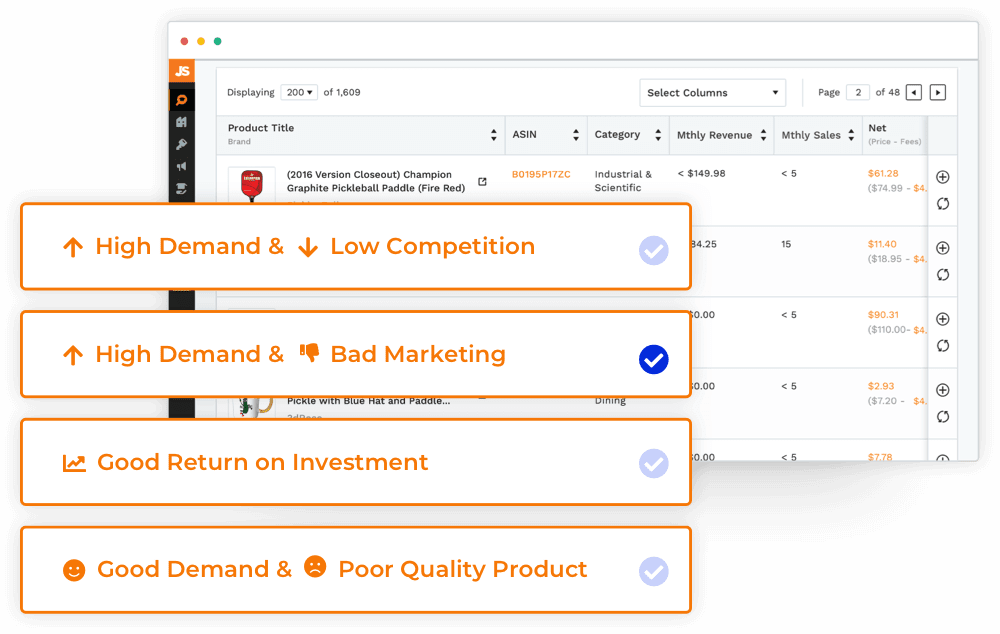
Pro Tip: Look for products with:
High demand, low competition
Lightweight & easy to ship
Priced $15–$50 for impulse buying
Mini Case Study:
Emma used Jungle Scout to identify a trending kitchen gadget. Within 3 months, she generated $12K/month with minimal ad spend.
Read the Product Research Guide
Step 6: How to Source Products & Work with Reliable Suppliers
Reliable suppliers are critical for long-term success.
Tools & Platforms:
Alibaba: Global suppliers for bulk orders
1688.com: China-based supplier site (local sourcing advantage)
Local Wholesale Markets: Faster shipping & easier communication
Actionable Tips:
Always order samples
Negotiate minimum order quantities (MOQ)
Verify supplier credibility (reviews, certifications)
Mini Case Study:
Alex avoided a major scam by using Alibaba Trade Assurance. The supplier delivered 100% of the goods on time, allowing Alex to scale faster.
Read the Supplier Guide
Step 7: Freight Forwarding & Shipping Made Simple
Shipping determines customer satisfaction and profitability.
Basics:
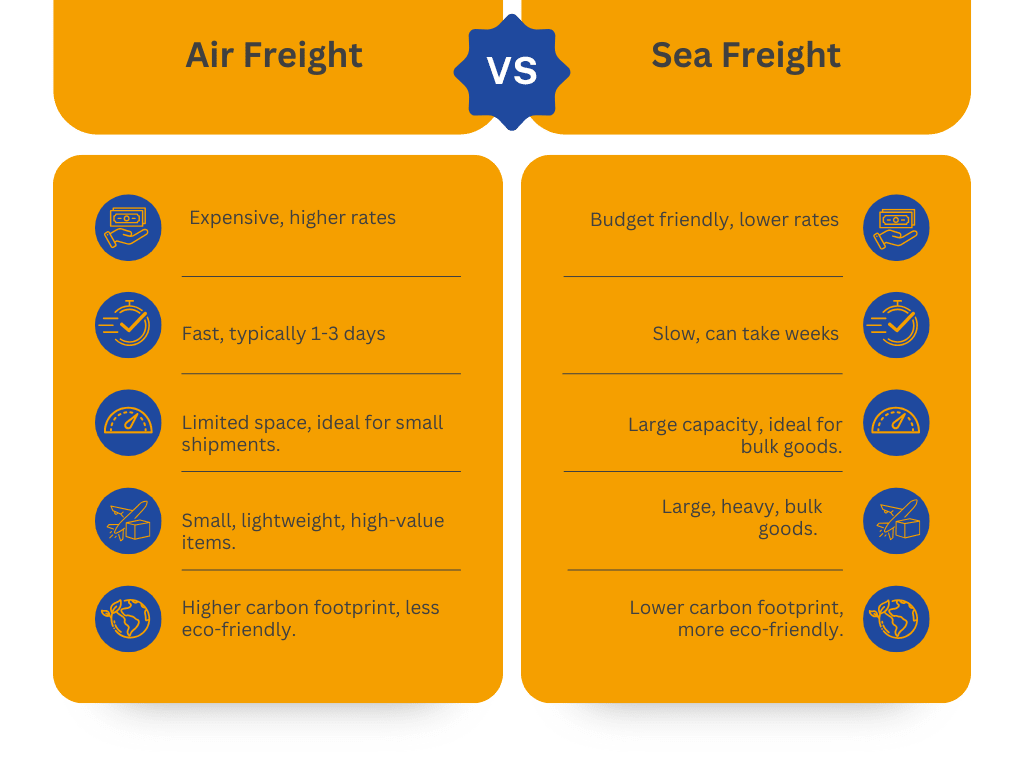
Air Freight: Fast, expensive, best for small shipments.
Sea Freight: Slower, cheaper, best for bulk orders.
FBA vs FBM: Amazon fulfillment options.
Pro Tip: Learn shipping terms:
FOB (Free On Board): Supplier handles goods till port
DDP (Delivered Duty Paid): Supplier handles customs
LCL (Less than Container Load): Ideal for small shipments
Mini Case Study:
Linda switched to a freight forwarder with DDP service and reduced shipping delays by 40%, boosting her seller rating.
Read the Shipping Guide
Step 8: How to Create & Optimize Your Product Listing
A professional listing converts visitors into buyers.
Optimization Tips:
SEO-friendly title & bullet points
High-quality images & videos
Include keywords naturally in description
Use A+ content or enhanced brand content (Amazon)
Quick Win: Use tools like Canva or Placeit for product mockups.
Mini Case Study:
After optimizing listings for SEO and images, Tom’s sales doubled within 6 weeks.
Read the Listing Optimization Guide
Step 9: E-commerce Advertising & Promotions
Advertising helps products reach buyers fast.
Strategies:
Amazon PPC & Sponsored Ads
TikTok Shop viral campaigns
Facebook & Instagram Ads
Flash sales, coupons, and bundle offers
Pro Tip: Start with small budgets; monitor ROAS (Return on Ad Spend) to optimize campaigns.
Common Mistake: Overspending without testing campaigns.
Read the Advertising Guide
Step 10: Managing Operations & Account Health
Step 10: Managing Operations & Account Health
Daily operations keep your business running smoothly.
Key Tasks:
Inventory management (avoid stockouts)
Order fulfillment & returns
Customer service & reviews
Monitoring account health & warnings
Pro Tip: Use inventory software like Sellbrite or TradeGecko for automation.
Mini Case Study:
A seller who monitored feedback weekly maintained a 4.8-star rating and avoided account suspension for 2 years.
Read the Operations Guide
Step 11: Scaling & Automating Your Business
Once stable, scale strategically.
Strategies:
Outsource repetitive tasks (virtual assistants)
Expand product lines & marketplaces
Use software for inventory, ads, and reporting
Build a recognizable brand with social media & email marketing
Pro Tip: Automate at least 30% of daily tasks before scaling to reduce errors.
Mini Case Study:
After automating listings and ads, Mark scaled his Shopify store to $100K/month with only 2 part-time assistants.
Read the Scaling & Automation Guide
Bonus: Why This Series Works
Written in simple, easy-to-understand language.
Covers every stage of the e-commerce journey.
Based on real-world experience managing Amazon, TikTok, and Shopify accounts.
Includes SEO tips and expert strategies for long-term success.
Conclusion
E-commerce offers massive opportunities, but only if you understand the full process. This roadmap gives you everything you need to go from beginner to pro seller, one step at a time.
Bookmark this guide, follow each step, and start building a profitable online business today.
Pro Tip: Keep learning from top sellers, test continuously, and document your results to avoid repeating mistakes.
Join the conversation
Sign in to share your thoughts and engage with other readers.
No comments yet
Be the first to share your thoughts!